The Holiday Ledger: Setting Quarterly Targets When Your Team Keeps Four Calendars

Q4 is closing and Q1 2027 is being drafted. Somewhere in that process a manager will divide a target by the number of working days in the quarter, and the resulting figure will be treated as objective fact. It rarely is. The denominator in that calculation is a calendar, and a UK team of any size is unlikely to share one.
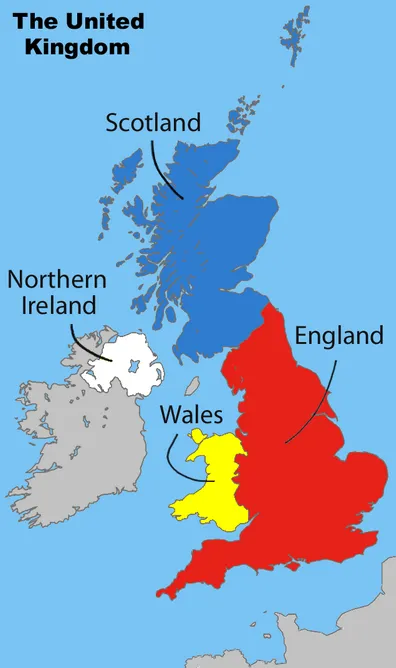
England and Wales follow one bank holiday list; Scotland follows another; Northern Ireland another again. School terms diverge, local closures differ, and annual leave clusters around dates that are not the same in Aberdeen as they are in Armagh. This is not a reason to abandon quarterly targets. It is a reason to build the calendar into the target rather than discovering it in month three.
Why the single-calendar assumption flatters the plan
The typical OKR template assumes a quarter of roughly sixty to sixty-five working days for everyone, and a stretch target calibrated against that figure. The assumption is comfortable because it is invisible. Nobody argues with a number they cannot see being applied to somebody else.
The divergence is not dramatic in any one quarter — two or three days, occasionally four — but three days is around five per cent of a quarter's capacity. In a stretch target already set at seventy per cent confidence, five per cent is the difference between a committed number and an aspirational one. It is enough to make a target quietly unfair to one office without anyone intending it.
The divergence also rotates. The team that is short-changed in Q1 may be advantaged in Q3. A fair quarterly system cannot rely on the year evening itself out, because objectives are reviewed and judged quarter by quarter.
The four-column ledger
Before targets are set, produce one table per quarter. Four columns, one row per nation represented in the team. Keep it to a single page.
| Nation | Statutory days in quarter | Commonly observed local days | Leave concentration points | Effective working days |
|---|---|---|---|---|
| England | 3 | 0 | February half-term week | ~57 |
| Wales | 3 | 0 | February half-term week | ~57 |
| Scotland | 3 | 1 (Easter Monday, locally observed) | Mid-February long weekend | ~59 |
| Northern Ireland | 4 | 0 | February half-term week | ~56 |
The figures above are illustrative for Q1 2027 and depend on your own leave patterns; verify statutory dates against gov.uk rather than against last year's spreadsheet. The purpose of the table is not precision to the half-day. It is to make visible the gap that would otherwise sit inside a single blended number.
Three things tend to emerge. First, the statutory list differs: 2 January belongs to Scotland, St Patrick's Day and the Twelfth belong to Northern Ireland, St Andrew's Day belongs to Scotland, and Easter Monday is not a Scottish bank holiday at all. Second, the summer bank holiday splits the UK cleanly — first Monday in August in Scotland, last Monday in England, Wales and Northern Ireland. Third, and most often missed, the school-term column matters as much as the statutory one, because it predicts when leave requests will arrive rather than when offices will be shut.
The pacing rule
Once the ledger exists, apply a short rule with three parts.
Set the headline number on the median calendar, not the longest. If one nation has fewer effective days, do not quietly reduce its share and say nothing. State the median, then state the adjustment.
Record any national deviation beyond two days as a margin note on the objective. Not as a caveat in a retrospective — as a line in the objective's written record at the point of commitment. One sentence is enough: 'Northern Ireland capacity assumes four statutory days in Q1; milestone two is assessed on a forty-day base.' This is documentation, not excuse-making, and the distinction is preserved by writing it before the quarter starts rather than after it ends.
Where a nation's deficit exceeds three days in any single month, move the milestone rather than shrink the target. Bring the check-in forward by a fortnight, or shift the milestone from month three to month two. A reduced share of a stretch target is a demotivating message; a rescheduled milestone is a planning decision.
One further check belongs in this rule: confirm that the check-in date itself is not a closure week. A review scheduled for the Easter week or the first week of January measures attendance, not progress.
Spotting a quietly unfair target
Four signals suggest that the calendar has been ignored.
- The same office misses in month three across consecutive quarters, and the misses are attributed to effort rather than capacity.
- Leave requests are refused in one location while approved in another, with no stated policy difference.
- A target that looks achievable in the monthly report proves unachievable in the final week, in a way that matches the local holiday pattern.
- The team's blended working-day count was calculated once, at the start of the year, and never revisited.
The second signal is the most serious. Refused leave is a visible cost of an invisible planning error, and it is remembered for longer than a missed key result.
Making it part of the OKR set, not an annex to it
The ledger should take twenty minutes and live beside the objective set, not in a separate operations folder nobody opens. Its value is diagnostic rather than archival. It tells you, when a target slips, whether you are looking at a performance question or an arithmetic one — and it lets you answer that question without implying that one office is underperforming on account of its postcode.
Quarterly goals are only as honest as the capacity assumptions underneath them. A four-column table is a modest instrument, but it converts an unexamined assumption into a shared number, and shared numbers are what a check-in can actually work with.