Fragile Numbers: Auditing Your Quarter's Assumptions the Week After a Fiscal Statement
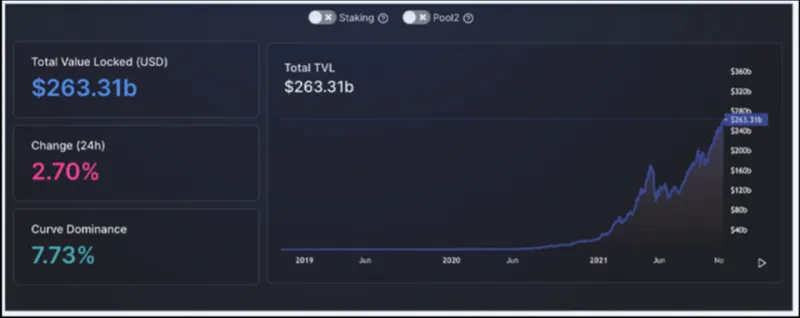
Photo: https://news.bitcoin.com/while-the-value-locked-in-defi-soars-dozens-of-dapps-leverage-cross-chain-support/, CC BY-SA 4.0, via Wikimedia Commons
Most UK teams draft their fourth-quarter objectives in September and then stop looking at the arithmetic underneath them. The statement lands in the autumn, the headlines run for a fortnight, and somewhere in the middle of it a key result that depended on a particular threshold, relief or employer cost quietly stops making sense. Nobody notices until the quarter closes and the numbers fail to appear.
The purpose of the session described here is narrow. It is not a strategy day. It is not a budget response. It is an audit of the assumptions embedded in an existing OKR set, conducted within a week of the statement while the detail is still legible and the team is still willing to engage with it.
Why this is an arithmetic event, not a strategy event
A fiscal statement moves three things that matter to an OKR set: the cost of employing people, the cost of investing, and the shape of demand in specific sectors. What it almost never moves is the reason a team exists. An objective about improving customer retention remains a sound objective when employer National Insurance contributions rise, exactly as it remained sound when the changes announced in 2024 took effect in April 2025. The objective holds; the route to it becomes more expensive.
Teams that confuse the two outcomes waste the session. They either rewrite objectives that were never in question, or they insist nothing has changed and discover in December that a target was arithmetically impossible from October onwards.
Before the two hours: build the assumption register
Assign one person — usually the OKR owner or a delivery lead, not the finance director — to spend thirty minutes assembling a single document. For each key result in the quarter, list the external assumptions it depends on. Most teams find between two and four per key result. Typical entries include: a headcount figure, a supplier price, a pass-through of employment costs, a business rates or relief position, an apprenticeship levy calculation, a sector-specific threshold, a funding assumption for a capital item.
Bring the statement itself, the departmental summaries most relevant to your cost base, and the current OKR set. Nothing else. The register is a working document, not a deliverable.
The session, block by block
Block one: what the statement actually said (20 minutes)
Read only the lines that touch the register. Resist the temptation to discuss the political coverage or the aggregate forecasts. The question for each line is factual: does this change a number we rely on, and from what date? Where the answer is uncertain — and for several measures it will be, pending consultation or secondary legislation — record the uncertainty explicitly rather than resolving it by guesswork.
Block two: sort the assumptions (35 minutes)
Every assumption in the register goes into one of three columns.
| Classification | Meaning | Action |
|---|---|---|
| Fixed | The statement does not touch it, or the change is immaterial to the target | Leave alone; record that it was checked |
| Fragile | The assumption still broadly holds but the headroom is now thin | Watch it; set a review date before quarter-end |
| Fallen | The assumption is materially wrong for the remainder of the quarter | Re-baseline the key result |
Most teams find that the great majority of assumptions are fixed. That is a useful finding in itself, and worth saying out loud — it prevents the session from acquiring a mood of general alarm. The work is concentrated in the small number of fallen items, and those are what the next block addresses.
Block three: the cost-to-hit test (30 minutes)
For each fallen assumption, ask one question: has this objective become more expensive to achieve, less expensive, or simply differently expensive? A rise in employer costs makes a hiring-dependent key result more expensive without making it wrong. A change in a relief makes a capital key result differently expensive — the same output, a different funding route.
The output of this block is a short written note against each affected key result, stating the change in cost or feasibility in plain terms. Avoid percentages where a sentence will do. The note should be intelligible to someone who did not attend.
Block four: re-baselining without renegotiation (25 minutes)
This is the part teams get wrong. Re-baselining is an arithmetic correction to a target that has become unattainable for reasons outside the team's control. Renegotiation is a change to the level of ambition. The first is legitimate and should happen quickly; the second requires a conversation with whoever set the objective and should not be smuggled into a two-hour session.
Three tests keep the distinction honest. Does the change leave the objective's intent untouched? Can you point to the specific line in the statement that caused it? Would the team have set the same target in September had they known? If all three answers are yes, move the number and record why.
Block five: write the record (10 minutes)
Each adjustment gets a dated entry in the OKR record: the original target, the revised target, the assumption that fell, and the evidence. This takes ten minutes and saves an hour of argument in January, when nobody remembers why the number changed.
What the session must not become
It must not produce a Budget objective. Fiscal statements are not strategic events for most organisations, and inventing an objective in response to one signals that the OKR set is reactive. It must not be chaired by finance alone, or it becomes a cost exercise rather than an OKR review. And it must not end with a decision to revisit everything at quarter-end, which is the same as deciding not to look.
Diarise the next one
Book the same two hours for the week after the next statement now, while the format is fresh. A Budget should never rewrite your strategy. It should, without exception, audit your arithmetic — and the teams that treat that as routine rather than crisis tend to be the ones whose quarter-end reviews contain no surprises.